Indigo Dyeing: The Process That Defines the Beauty of Hmong Clothing
Khi ngắm nhìn trang phục truyền thống của người H’Mông, nhiều người thường bị thu hút bởi những hoa văn được vẽ và thêu tỉ mỉ trên nền vải lanh. Mỗi đường nét đều mang một vẻ đẹp riêng, nhưng đằng sau đó không chỉ là yếu tố trang trí mà còn là những câu chuyện gắn liền với đời sống và ký ức của cộng đồng. Trong số đó, họa tiết lấy cảm hứng từ cây thuốc phiện là một hình ảnh đặc biệt, được nhiều nghệ nhân địa phương lưu giữ qua nhiều thế hệ.
If beeswax batik can be seen as the step that gives a pattern its “soul,” indigo dyeing is the process that ultimately defines the appearance of traditional Hmong clothing. The deep, enduring indigo blue has become one of its most distinctive features, contributing to the unique beauty that makes Hmong garments instantly recognizable.
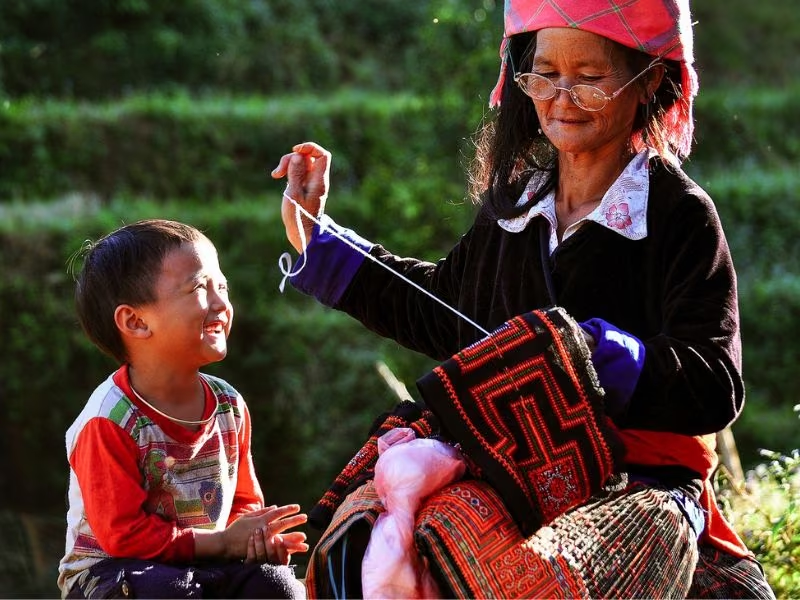
Theo chia sẻ của người H’Mông, họa tiết này được sáng tạo từ hình dáng của cây thuốc phiện ở từng giai đoạn phát triển. Từ khi cây còn non với thân xanh mảnh mai, đến lúc nở những bông hoa đỏ nổi bật và cuối cùng là khi kết thành quả, mỗi giai đoạn đều trở thành nguồn cảm hứng để các nghệ nhân cách điệu thành những đường nét, hình khối trên vải lanh. Qua đôi bàn tay khéo léo và óc sáng tạo của người làm nghề, những hình ảnh quen thuộc trong đời sống đã được chuyển hóa thành các hoa văn mang tính nghệ thuật, góp phần tạo nên vẻ đẹp đặc trưng cho trang phục truyền thống của người H’Mông.
Điều đáng chú ý là khi xuất hiện trên vải lanh, họa tiết cây thuốc phiện không mang ý nghĩa khuyến khích hay tôn vinh việc trồng cây thuốc phiện. Thay vào đó, đó là sự phản ánh những gì từng gắn bó với cuộc sống, môi trường tự nhiên và ký ức của cộng đồng trong một giai đoạn lịch sử. Cũng giống như nhiều họa tiết khác lấy cảm hứng từ cây cối, hoa lá hay núi rừng, hình ảnh cây thuốc phiện đã được chuyển hóa thành một ngôn ngữ nghệ thuật, góp phần làm phong phú thêm kho tàng hoa văn truyền thống của người H’Mông.
Để tạo nên những họa tiết này, người nghệ nhân sử dụng kỹ thuật vẽ sáp ong trên vải lanh trước khi nhuộm chàm. Sau khi lớp sáp được loại bỏ, các hoa văn hiện lên rõ nét trên nền vải xanh đậm, tạo nên sự tương phản hài hòa và mang vẻ đẹp rất riêng. Chính sự kết hợp giữa kỹ thuật thủ công và cảm hứng từ thiên nhiên đã giúp mỗi tấm vải trở thành một tác phẩm chứa đựng cả giá trị thẩm mỹ lẫn văn hóa.
Ngày nay, những họa tiết truyền thống vẫn tiếp tục được các nghệ nhân gìn giữ như một phần của bản sắc dân tộc. Với du khách, đó có thể chỉ là những đường nét đẹp mắt trên trang phục. Nhưng với người H’Mông, mỗi họa tiết đều là một câu chuyện, một ký ức và một cách để kết nối quá khứ với hiện tại thông qua nghề thủ công truyền thống.
Khi hiểu được ý nghĩa phía sau từng hoa văn, người xem sẽ nhận ra rằng vẻ đẹp của trang phục H’Mông không chỉ nằm ở màu sắc hay kỹ thuật chế tác, mà còn ở những câu chuyện văn hóa được lưu giữ trên từng tấm vải, qua đôi bàn tay của những người nghệ nhân đã dành cả đời để gìn giữ nghề truyền thống.
For the Hmong people, indigo is more than a natural dye. It is the result of generations of traditional knowledge and craftsmanship. The dye is made from the leaves of the indigo plant through a careful process of soaking and fermentation. Producing a high-quality dye requires considerable experience, from preparing the raw materials and mixing the dye solution to carefully controlling each stage of the dyeing process.
Once the patterns have been drawn onto the hemp fabric with beeswax, the cloth is repeatedly soaked in an indigo vat. This stage requires patience, as the deep color cannot be achieved in a single dyeing session. After each soak, the fabric is taken out and exposed to the air before being immersed in the dye again. Through this repeated process, the indigo gradually becomes deeper, richer, and more evenly distributed across the surface of the fabric.
Interestingly, throughout the dyeing process, the patterns drawn with beeswax remain intact. The wax acts as a protective “barrier,” preventing the indigo dye from penetrating the areas where the patterns have been created. Only after the dyeing is complete and the wax is removed do the patterns clearly emerge against the deep blue background, creating a harmonious contrast and the distinctive beauty of Hmong clothing.
However, this is also a stage that requires considerable experience. If not handled properly, the wax may be difficult to completely remove from the surface of the fabric or may affect the sharpness of the patterns. Artisans therefore need to work carefully at every step, from dyeing and drying the fabric to removing the wax. Even a small mistake can affect the final result, potentially diminishing the work that has gone into all the previous stages.
Beyond its aesthetic value, indigo is also closely connected to Hmong life. Its deep blue tone has a simple, earthy quality that evokes the natural environment and reflects a way of life closely connected to the mountains and forests. With years of use, the indigo on the fabric may soften and subtly change over time, creating a distinctive character that is difficult to replicate with industrial dyes.
Today, as modern fabrics and synthetic dyes have become increasingly common, traditional indigo dyeing continues to be preserved by many Hmong artisans and families. This is not only because of the unique quality of the dye, but also because indigo dyeing is an essential part of the process of creating traditional Hmong clothing. Every piece of indigo-dyed fabric is the result of time, experience, and patience-values that have been passed down from one generation to the next.
For visitors, the indigo color of Hmong clothing may simply appear as a beautiful and striking shade of blue. For the Hmong people, however, it represents the result of a meticulous process of craftsmanship and serves as a symbol of a traditional craft that has accompanied their community for generations. Each garment is therefore more than something to wear. It is also a vessel for preserving cultural values and the identity of the Hmong people.
